
At this time of the year, we normally share our highlights from the previous year to celebrate all that our community has done to support families experiencing homelessness in Hennepin County. But this is not a normal time. We are faced with a defining moment in our history.
It is not unprecedented. For too many in our city, state, and country, this is just the latest version of injustice and cruelty they have experienced.
In defining times, we reflect on what our mission and values call us to do as an organization. When the federal government harms and sows fear in our community—a community of families from all backgrounds—our mission calls upon us to share what we see and know. We have witnessed that the federal government’s unlawful, unjust, and retaliatory actions are exacerbating the suffering of the children and parents we serve. They are increasing the number of families without housing, food, or the ability to live with dignity, safety, and happiness.
The families we serve
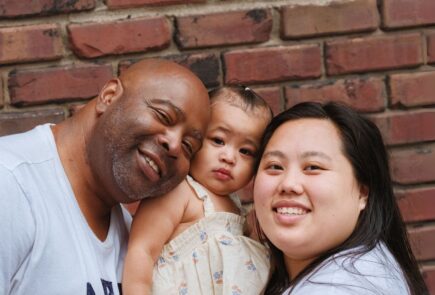
It is important to remember the people we serve. Our families are often our most vulnerable, underrepresented, and underserved neighbors.
- 71% of heads of households are women
- 95% of families live at the federal poverty guideline or below (e.g., $32,150 for a family of 4)
- 43% of heads of household have a disability
- 94% are Black, Indigenous, or People of Color
- 63% are children under 18
- 25% of children are under 5
Our mission calls on us to stand up for those we serve as they face an ever-increasing litany of harms.
The increasing cascade of harms to families
Families experiencing homelessness or housing instability have already experienced a cascade of harms. While a singular event may push a family into homelessness, there is an extensive line of harmful systems that lead to homelessness.1 Chief among them are the lack of affordable medical care, livable wage jobs, affordable and accessible childcare, and affordable housing. For example, when a serious medical event happens, and someone can no longer work, they no longer have an income, nor do they have generational wealth to fall back on. They fall behind on rent and cannot get out of the unmanageable debt trap the medical event sparked. As a result, they cannot pay their rent or mortgage, and they find themselves without a home.
Now, introduce to that long list of harms, the tyranny of ICE. The current ICE operation in Minnesota and the way it is being executed amounts to yet another harm facing families. Here are some of the specific ways that ICE’s operation in Minnesota harms our neighbors:
Income loss leads to homelessness
When ICE detains a family’s primary earner, they can lose up to 70% or more of their income, which leads to an inability to pay rent, which leads to eviction and homelessness.2 Homelessness, in turn, has a long-term impact on a family, including chronic poverty, educational setbacks for children, and declines in health and well-being.
Similar circumstances arise when earners have the impossible choice of leaving their houses and going to work, risking detention/deportation, and leaving a job to stay home in the hope of staying safe. We know that a stable, livable income and the ability to pay for housing are key to preventing homelessness and helping families experiencing homelessness gain stabilization.
Shelters and schools are no longer safe spaces
On January 31, 2025, U.S. Immigration and Customs Enforcement issued a memo stating that previously off-limits sensitive locations, like houses of worship, schools, and shelters, were no longer protected from immigration enforcement arrests.3 The reason for this “sensitive locations” exclusion? Ensuring that adults and children can access essential services or activities.
While we have not been approached by ICE at any of our locations, we know other shelters and childcare centers have been. ICE is entering elementary, middle, and high schools in Minneapolis and other communities. Educators have been taken as they enter or leave school, in front of children who have been sprayed with chemicals at close range. Children of all backgrounds are returning home speechless, confused, and terrified. As a result, risks of homelessness for families and their children increase in the short- and long-term.
- Education interruptions increase the risk of homelessness in the short- and long-term
Schools are seeing a drop in attendance.4 Families are afraid to be separated from their children for fear that any of them may be taken by ICE officials, and they will disappear, never to be reunited.
Education is essential to prevent and address homelessness. All children need access to a safe, stable education. Education is “among the most powerful antidotes to homelessness in the long-term and is a source of immediate support and connection to housing and services, in the short term. Youth without a high school diploma are 4.5 times more likely to experience homelessness later in life, making the lack of a high school diploma/GED the single greatest risk factor for experiencing homelessness as a young adult.”5
- Demand for shelter increases, and families are forced into hiding
People are detained on their way to—or in—the hospital. ICE is entering schools. Families who might otherwise raise their hand for help from shelters like People Serving People may continue to sleep in locations we might otherwise deem “unsafe,” such as living in their vehicles, couch surfing, and doubling up in spaces that are not physically or emotionally safe. But when faced with an impossible choice of risking detention based on the color of their skin or caring for their children, parents will do anything to keep being separated from their children.
Shelters are impacted too. Not only do the ICE operations sow fear, but they also require nonprofit organizations like People Serving People to spend their direct and indirect resources addressing the fact that our entire community, and especially those who are most vulnerable, are at risk of not having a sense of safety that dignity requires. Additionally, in addressing that issue, services are at risk of disruption. Many shelters, like People Serving People, are already at capacity.
Four things you can do to stand with families
Do something. There are so many ways to act on your values. This is not about political difference. This is about a difference in values and morality.
1. Know your rights
Many organizations have resources for the community that are audience-specific—that is, they break down people’s rights by groups such as businesses, protesters, and immigrant communities. A good place to start learning about your rights is the “Know Your Rights with ICE” guide from the Minnesota Attorney General’s Office.
2. Say something
The more people who are aware, the more people will care. The more people who care, the more we can mitigate this untenable and cruel cascade of harms. Contact your local and state representatives. Call your federal representatives. Talk with your friends and family. The time to say something is now.
3. Act
Do something in your community to support your neighbors. There are many resources available for you to explore and determine the best way you can support your community. The Minnesota Council for Nonprofits is a great place to start. Please see MCN’s “Resources: supporting community during ICE operations.”
4. Donate
You can provide mutual aid by donating to many organizations. We also ask for your ongoing support to keep families experiencing—or at risk of experiencing—homelessness surrounded with support and care.
Resources cited
- 1. nationalhomeless.org/homelessness-in-the-us/ ↩︎
- 2. www.bakerinstitute.org/research/social-and-economic-effects-expanded-deportation-measures ↩︎
- 3. assets.aila.org/files/2457baa5-073e-4bfc-a500-fd0086fd80ce/25021902.pdf?1739983609=. ↩︎
- 4. www.startribune.com/attendance-drops-at-minnesota-schools-as-federal-immigration-enforcement-intensifies-anxieties/601560458 ↩︎
- 5. https://schoolhouseconnection.org/article/data-profiles ↩︎